
UNC-Chapel Hill’s AI Community is rapidly gaining momentum as faculty, students, staff and external partners come together to explore how artificial intelligence can shape research, teaching, operations and entrepreneurship. Organized by Innovate Carolina and led by Patrick Kastian, assistant director of the Data Intelligence Hub, the community provides a structured yet accessible space for people across campus to learn, experiment and collaborate.
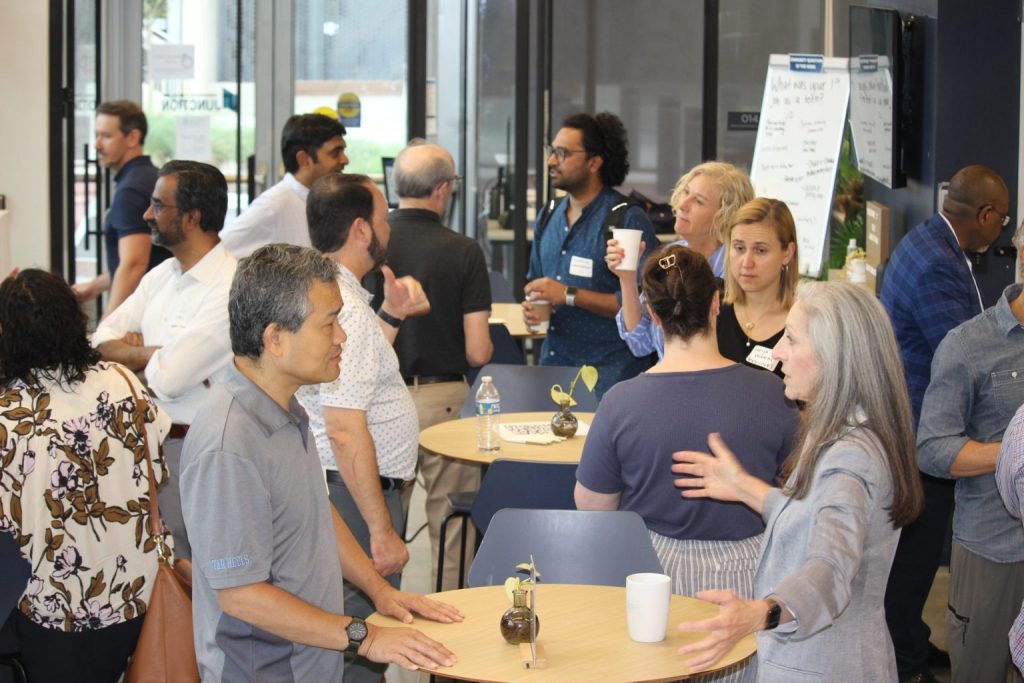
What began as an extension of the Provost’s AI Committee has quickly evolved into a dynamic network of nearly 1,000 participants. Much of that growth has been fueled by regular workshops, meetups and learning sessions hosted at the Innovate Carolina Junction, where participants gather to share ideas, test tools and build connections across disciplines. These in-person sessions have become a central hub for activity, creating opportunities for researchers, instructors, founders and operational leaders to engage side by side.
A key insight emerging from the community’s programming is that people are not just seeking new AI tools—they are looking for practical ways to apply them. Workshops emphasize hands-on learning, helping participants develop frameworks for prompting, validating outputs and integrating AI into real-world workflows. Upcoming sessions will build on this foundation, exploring applications ranging from venture investing and business development to organizational strategy and workforce design.
The community also highlights the importance of cross-campus collaboration. By bringing together individuals working in different domains, the AI Community is helping surface new ideas at the intersections of research, teaching and innovation. These connections are already sparking new projects, partnerships and entrepreneurial opportunities.
At its core, the initiative reflects a broader shift at Carolina: AI is becoming an integral part of how people learn, create and solve problems. Through consistent programming and convening at the Junction, Innovate Carolina is not only supporting exploration of this rapidly evolving technology, but also helping translate curiosity into action and impact across the university.